Meta Description: Early back pain treatment prevents minor issues from becoming major spinal problems. Learn why acting quickly leads to better outcomes and how to find the right care.
In most areas of health, the wisdom of early intervention is well established. We screen for conditions before they cause symptoms. We treat high blood pressure before it causes a stroke. We address dental decay before root canals become necessary. The principle is straightforward: a small problem caught early is almost always easier to treat than a large problem allowed to develop.
Back pain should be no different. Yet there remains a persistent cultural tendency to tolerate spinal discomfort far longer than what is wise. The gap between ‘I’ll wait and see if it gets better’ and ‘I should have got this treated months ago’ is often measured in months of unnecessary suffering and significantly increased complexity of treatment.
The Biology of Why Early Treatment Works
When back pain begins, the body is typically dealing with a specific, localised problem: an irritated nerve root, a stressed disc, an overloaded spinal joint, or a muscle imbalance. At this stage, the problem is contained. The nervous system’s response is proportionate. The structural changes are limited.
Without appropriate intervention, several things happen in parallel. The primary problem often progresses. Secondary adaptations develop as the body protects the painful area: compensatory movement patterns, altered gait, and asymmetric muscle loading that create new stress points elsewhere in the spine. The nervous system gradually recalibrates toward a more pain-sensitive baseline.
Each of these processes is reversible in its early stages. Each becomes progressively more difficult to reverse with time. This is the biological basis for why early treatment consistently produces better outcomes than delayed care.
The Social and Economic Cost of Delayed Action
Beyond the physical dimension, late-treated back pain carries real costs that often accumulate invisibly:
Work productivity declines long before back pain becomes severe enough to cause absence. Presenteeism – being physically present but functioning below capacity – is difficult to quantify but very real.
Sleep quality suffers with even moderate persistent back pain, creating a fatigue burden that affects mood, cognitive function, and physical recovery capacity.
Physical activity levels drop as pain makes movement feel risky or uncomfortable, leading to the deconditioning cycle that makes chronic pain harder to treat.
Social participation contracts gradually – activities avoided, trips not taken, commitments declined – in ways that affect mental health and quality of life significantly.
When ‘Wait and See’ is Appropriate – and When It isn’t
Mild muscle strain from unusual exertion often resolves within a week or two with relative rest, gentle movement, and basic self-care. This is the category where ‘wait and see’ is genuinely appropriate.
The situations that warrant earlier professional attention include:
- Pain that has persisted beyond two to three weeks without meaningful improvement
- Any neurological symptoms: tingling, numbness, or weakness in the legs or arms
- Pain that began after a specific incident – a fall, an accident, or an unusual lifting event
- Night pain that wakes you from sleep or morning pain that takes more than an hour to improve
- A pattern of recurrent episodes that are becoming more frequent or more severe
What Early Non-Surgical Spinal Care Involves
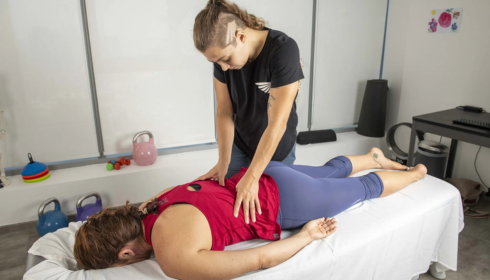
For mild structural issues, early Back Pain Treatment might involve targeted physiotherapy, ergonomic advice, and a structured exercise programme. For more significant disc or nerve involvement, non-surgical spinal decompression reduces disc pressure and nerve irritation before these progress to more entrenched, chronic problems.
At ANSSI Wellness, the emphasis is always on identifying the root cause accurately before committing to a treatment path – ensuring care is genuinely targeted rather than generic.
Building a Spine That Lasts
Early treatment is not a one-time event but the beginning of a different relationship with spinal health – one defined by awareness, prevention, and active maintenance rather than crisis management.
People who address their back pain early, engage fully with their rehabilitation, and implement the lifestyle adjustments their care team recommends tend to maintain significantly better spinal health over the long term. They experience fewer recurrences, recover faster when minor setbacks occur, and generally lead more active, comfortable lives.